Main Sequence Phase:
- Stars start their lives in the main sequence phase, fusing hydrogen into helium in their cores.
- The star's stability and luminosity depend on its mass. More massive stars are brighter and hotter, burning their fuel faster.
Red Giant Phase:
- As the star exhausts its hydrogen supply in the core, it begins to evolve into a red giant.
- The core contracts and heats up, while the outer layers expand and cool, giving the star its reddish appearance.
Supernova or Planetary Nebula:
- The fate of a star after the red giant phase depends on its mass:
- Low-mass stars: They gently shed their outer layers, forming a planetary nebula, while the remaining core becomes a white dwarf.
- High-mass stars: These stars undergo a dramatic supernova explosion, ejecting their outer layers into space. The remaining core may collapse into a neutron star or black hole.
Neutron Stars and Black Holes:
- The final evolutionary stages for massive stars are neutron stars or black holes.
- Neutron stars: They are dense remnants of supernovae where electrons and protons are compressed into neutrons.
- Black holes: They are regions with incredibly strong gravitational forces, formed when massive stars collapse under their own gravity.
Factors that contribute to stellar evolution include:
- Mass: The mass of a star plays a crucial role in determining its luminosity, lifespan, and ultimate fate.
- Composition: The chemical makeup of a star can affect its evolutionary processes.
- Rotation: The rotation rate of a star can influence its internal structure and shape.
- Magnetic fields: Magnetic fields can affect the star's surface activity and mass loss.
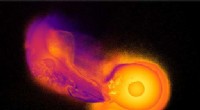
- Binary Interactions: If a star is part of a binary system, interactions with its companion can impact its evolution.
Stellar evolution is a complex process influenced by various physical mechanisms. By studying these changes, astronomers gain insights into the life cycles and fates of stars and the universe's overall evolution.