1. Neutron degeneracy pressure: Neutron stars are supported against gravitational collapse by neutron degeneracy pressure. This pressure arises from the Pauli exclusion principle, which prevents neutrons from occupying the same quantum state. As the mass of the neutron star increases, the neutron degeneracy pressure becomes less effective in resisting gravitational collapse.
2. General relativity effects: As the mass of a neutron star increases, general relativistic effects become more significant. These effects, such as gravitational time dilation and frame dragging, alter the star's structure and stability. At a sufficiently high mass, general relativistic effects can cause the neutron star to become unstable and collapse under its gravity.
3. Chandrasekhar mass: The Chandrasekhar mass is the maximum mass that a white dwarf can support against gravitational collapse through electron degeneracy pressure. When a white dwarf exceeds this mass, it undergoes a gravitational collapse and forms a neutron star. The Chandrasekhar mass is about 1.4 times the mass of our Sun.
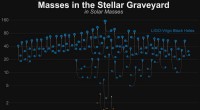
4. Maximum neutron star mass: Theoretical calculations and observations suggest that there is an upper limit to the mass of neutron stars. This upper mass limit is estimated to be around 2-3 times the mass of our Sun. Neutron stars that exceed this mass are thought to collapse into black holes due to the overwhelming gravitational forces.
The exact value of the upper mass limit for neutron stars is still a subject of research and debate in astrophysics. Observations of neutron stars and theoretical models help refine our understanding of their structure and stability, providing insights into the nature of these fascinating objects and the limits imposed by the fundamental laws of physics.