- Size: Mercury is the smallest planet in our solar system, with a radius of about 2,439 kilometers (1,515 miles).
- Shape: Mercury is slightly oblate, meaning it bulges slightly at the equator and is flattened at the poles.
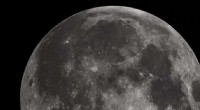
- Surface Features: The surface of Mercury is heavily cratered, with many craters caused by impacts from asteroids and comets over its history. It has a thin atmosphere, which consists mostly of helium, oxygen, and sodium. The surface is barren, with no evidence of liquid water or active volcanism.
- Color: Mercury's surface appears reddish-orange in color, due to the presence of iron-rich minerals.
Description:
1. Extreme Temperatures: Mercury's proximity to the Sun subjects its surface to extreme temperature variations. The daytime temperatures can reach up to 450 degrees Celsius (840 degrees Fahrenheit), making it hot enough to melt lead, while the nighttime temperatures can drop as low as -180 degrees Celsius (-290 degrees Fahrenheit).
2. Cratered Surface: The surface of Mercury is heavily cratered, a testament to its tumultuous past. The craters range in size from tiny pits to giant basins hundreds of kilometers in diameter. Some of the notable craters include the Caloris Basin, which is the largest impact crater in the solar system, measuring about 1,550 kilometers (960 miles) across.
3. Scarps: Mercury's surface is also marked by numerous cliffs or scarps, which are formed by the contraction of Mercury's interior. These scarps can be several hundred kilometers long and up to 2 kilometers (1.2 miles) high.
4. Smooth Plains: In contrast to the cratered terrain, some parts of Mercury's surface are relatively smooth. These regions, known as smooth plains, are thought to have formed from volcanic eruptions or the filling in of impact basins with lava flows.
5. Thin Atmosphere: Mercury has a very thin atmosphere, about one trillionth the density of Earth's atmosphere. The atmosphere consists mostly of helium, oxygen, sodium, and potassium.
6. Weak Magnetic Field: Mercury has a weak magnetic field, about 1% the strength of Earth's magnetic field. This magnetic field is thought to be generated by the movement of liquid iron in Mercury's core.