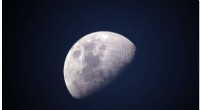
When the Moon is full, it is facing the Earth directly. This means that the entire side of the Moon that is facing the Earth is lit by the Sun. As the Moon orbits the Earth, it moves away from the direct line between the Earth and the Sun. This means that less and less of the Moon's surface is lit by the Sun. Eventually, the Moon reaches the new moon phase. This means that the side of the Moon that is facing the Earth is not lit by the Sun.
The Moon's phases repeat themselves every 29.5 days. This is the amount of time it takes for the Moon to orbit the Earth.