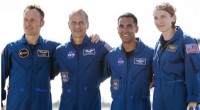
EVAs are incredibly important for many reasons. They allow astronauts to repair and maintain the exterior of the ISS, conduct scientific experiments, and explore new environments. They also give astronauts the opportunity to learn about the effects of space on the human body and mind, which is essential for future missions to Mars and beyond.
Before an astronaut can perform an EVA, they must undergo extensive training. This involves simulating EVAs in water tanks and vacuum chambers, as well as learning how to operate the spacesuit and other equipment. Astronauts must also be physically and mentally fit to withstand the challenges of working in space.
EVAs are inherently risky, and there have been a number of close calls over the years. However, they remain essential for the advancement of space exploration. By pushing the boundaries of human capability, astronauts are paving the way for future missions to distant worlds.
Here are some additional interesting facts about EVAs:
* The first EVA was conducted by Soviet cosmonaut Alexei Leonov on March 18, 1965.
* The longest EVA was conducted by Russian cosmonaut Anatoly Solovyov and NASA astronaut Michael Foale on March 11, 1995. The pair spent 8 hours and 48 minutes outside the Mir space station.
* The most complex EVA was conducted by NASA astronauts Bruce McCandless II and Robert L. Stewart on February 7, 1984. The pair used the Manned Maneuvering Unit (MMU) to fly freely in space.
* EVAs have been conducted on the ISS, the moon, and in low Earth orbit.
* Astronauts wear spacesuits that protect them from the harsh environment of space. Spacesuits provide air, temperature regulation, and radiation protection.
* EVAs are essential for the maintenance and repair of spacecraft, the conduct of scientific experiments, and the exploration of new environments.