Formation of Auroras:
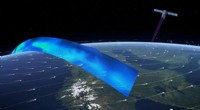
1. Solar Wind: The Sun continuously releases a stream of charged particles called the solar wind. These particles travel through space and interact with Earth's magnetic field.
2. Earth's Magnetic Field: Earth has a strong magnetic field that protects the planet from harmful solar radiation. The magnetic field lines are strongest at the poles and weakest at the equator, forming an invisible protective bubble.
3. Collision with Magnetic Field: When the charged particles from the solar wind encounter Earth's magnetic field, they are deflected towards the poles. The magnetic field lines guide the particles along the lines of force.
4. Interaction with Atmosphere: As the charged particles move along the magnetic field lines towards the polar regions, they collide with atoms and molecules in the Earth's atmosphere. This collision causes the atoms and molecules to become excited and emit light, resulting in the colorful displays of auroras.
5. Color and Altitude: The color of the auroras depends on the type of atmospheric gas that the charged particles collide with. Collisions with oxygen atoms primarily produce green and red auroras, while collisions with nitrogen molecules lead to blue and violet auroras. The altitude of the auroras also affects their color, as different atmospheric gases are present at different altitudes.
Auroras are dynamic phenomena, and their shape, intensity, and color can change rapidly. They are most commonly observed during periods of high solar activity, such as during solar storms or when the Sun emits a significant amount of charged particles.
The occurrence of auroras is influenced by various factors, including the strength and orientation of the solar wind, the tilt of Earth's magnetic axis, and the location of the observer. These factors determine whether the charged particles reach the polar regions and interact with the atmosphere to create the beautiful and mesmerizing displays of the auroras.