1. Luminosity and Energy Output: Massive stars are incredibly luminous, emitting enormous amounts of light and other forms of electromagnetic radiation. They can outshine the Sun by millions to billions of times. This high luminosity is due to their copious energy production, which comes from nuclear fusion reactions in their cores.
2. Color: The surface temperatures of massive stars are generally higher compared to the Sun. This means they emit more energy in the blue and ultraviolet parts of the spectrum. As a result, massive stars often appear bluish-white or even blue in color.
3. Lifespan: Massive stars have much shorter lifespans compared to Sun-like stars. They exhaust their nuclear fuel much more rapidly due to their high energy output and intense internal processes. The lifespan of a 10 solar mass star is approximately 20 million years, whereas a 1 solar mass star like our Sun has a lifespan of about 10 billion years.
4. Mass Loss and Stellar Winds: Massive stars experience significant mass loss throughout their lives. They emit powerful stellar winds, driven by intense radiation pressure and pulsations from the stellar surface. These winds can carry away a substantial portion of the star's mass over time.
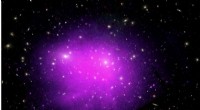
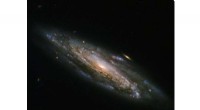
5. Supernovae and Stellar Explosions: The final fate of massive stars is often marked by a supernova explosion. When a massive star exhausts its nuclear fuel, it can undergo a catastrophic gravitational collapse, triggering a supernova event. Supernovae are incredibly energetic and can outshine entire galaxies for brief periods.
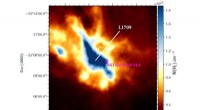
6. Formation and Environment: Massive stars tend to form in regions of intense star formation, such as within massive star clusters or giant molecular clouds. They require an abundance of gas and dust to condense and accumulate sufficient mass for their formation.
7. Impact on the Universe: Massive stars play a pivotal role in shaping the universe. They enrich the interstellar medium with heavy elements synthesized in their cores through nuclear fusion. These elements are crucial for the formation of new stars, planets, and structures throughout the cosmos.
In summary, massive stars are characterized by their exceptional luminosity, high surface temperatures, short lifespans, prominent mass loss, and the likelihood of ending their lives in supernova explosions. They are powerful and influential players in shaping the universe on various scales.