A mirage is an optical phenomenon caused by the reflection and refraction of light between two layers of air with different temperatures. They are often seen in deserts, where hot air near the ground creates an optical illusion of water.
Scintillation:
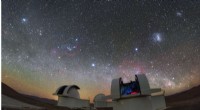
Scintillation is a shimmering effect caused by the refraction of light waves as they pass through layers of air with different densities. It is commonly observed when light from stars or other celestial objects passes through the atmosphere, causing them to appear to twinkle.
Atmospheric lensing:
Atmospheric lensing is the bending of light rays as they pass through the Earth's atmosphere, which acts as a giant lens. This phenomenon is responsible for various effects, such as the magnification and distortion of the Sun and the Moon near the horizon.
Rainbow:
A rainbow is a natural optical phenomenon that occurs when sunlight interacts with raindrops. It is caused by a combination of refraction, reflection, and dispersion of light. Rainbows are typically observed in the sky opposite the Sun and consist of a colorful circular arc with red on the outer side and violet on the inner side.
Sundogs:
Sundogs are bright spots that appear in the sky, typically about 22° to the left and right of the Sun. They are caused by the refraction of sunlight as it passes through ice crystals in the atmosphere.
Green flash:
A green flash is a brief flash of green light that can be observed just as the Sun dips below the horizon or rises above it. It is caused by the dispersion of sunlight as it passes through the atmosphere and is most commonly seen near the equator.