Edwin Powell Hubble was born on November 20, 1889, in Marshfield, Missouri, United States. After completing his education, he became a distinguished astronomer and made groundbreaking discoveries that challenged conventional beliefs about the universe. Hubble's most notable achievement was his observational evidence supporting the expanding universe theory.
In 1929, Hubble published his groundbreaking paper "A Relation between Distance and Radial Velocity among Extra-Galactic Nebulae," which presented his observations of the redshift in the spectra of distant galaxies. Hubble's observations indicated that the farther a galaxy is from Earth, the faster it is moving away from us. This discovery revolutionized our understanding of the universe and supported the idea that the universe is constantly expanding. Hubble also contributed to the classification of galaxies, introducing the Hubble sequence, which categorizes galaxies based on their visual morphology.
In recognition of Edwin Hubble's significant contributions to astronomy, the National Aeronautics and Space Administration (NASA) and the European Space Agency (ESA) named the Hubble Space Telescope after him in 1983. The HST was launched on April 24, 1990, aboard the Space Shuttle Discovery during mission STS-31. The telescope's primary mirror is 2.4 meters in diameter and orbits Earth at an altitude of approximately 547 kilometers.
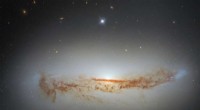
The Hubble Space Telescope revolutionized the field of astronomy by providing stunning images and data from the depths of the universe. It has captured breathtaking images of galaxies, nebulae, star clusters, and other celestial objects, allowing astronomers to study the cosmos in unprecedented detail. Hubble's discoveries have deepened our understanding of the universe, the formation and evolution of galaxies, and the birth and death of stars.
By naming the telescope after Edwin Hubble, NASA and ESA paid homage to his groundbreaking work and recognized his enduring legacy in astronomy. The Hubble Space Telescope continues to carry on Hubble's legacy, opening new windows to the wonders of the universe and inspiring generations of scientists and space enthusiasts around the world.