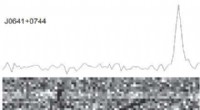
For stars with a mass similar to our Sun, the supernova explosion results in the formation of a neutron star. A neutron star is an extremely dense object composed primarily of neutrons. It has a very small radius, typically only a few kilometers, but it can have a mass several times that of our Sun. The gravitational force on a neutron star is so strong that electrons and protons are squeezed together to form neutrons.
In the case of very massive stars, those with masses several times greater than that of our Sun, the supernova explosion can lead to the formation of a black hole. A black hole is a region of spacetime where gravity is so strong that nothing, not even light, can escape. The boundary of this region is called the event horizon. Inside the event horizon, spacetime is distorted in such a way that all paths lead toward the center of the black hole, and there is no way to escape.