Observational Evidence: The solar nebular theory is supported by numerous observational evidences:
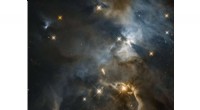
- Protoplanetary Disks: The existence of protoplanetary disks around other stars, which are similar to the early solar nebula, provides strong evidence for the theory. These disks consist of gas and dust, and they are believed to be the birthplaces of planetary systems.
- Compositional Similarities: The chemical composition of planets, moons, asteroids, and comets in our solar system shows similarities in terms of the relative abundances of different elements. This suggests a common origin from the same primordial solar nebula.
- Orbital Characteristics: The orbital properties of planets in our solar system, such as their nearly circular orbits and their orbital planes being close to the same plane, are consistent with the predictions of the solar nebular theory.
Theoretical Plausibility: The solar nebular theory is supported by theoretical models and simulations. These models demonstrate how a rotating cloud of gas and dust can collapse under gravity, forming a central protostar (the Sun) surrounded by a flattened disk. The disk can then undergo processes like gravitational instabilities, planetesimal formation, and accretion to eventually give rise to the planets and other bodies we see today.
Explains Diverse Features: The theory successfully explains various features of our solar system, such as the formation of the planets in a specific order based on their distance from the Sun, the presence of rocky inner planets and gas giants in the outer regions, the formation of moons around planets, the existence of asteroid belts and Kuiper Belt objects, and the overall architecture and dynamics of the system.
Consistent with Laws of Physics: The solar nebular theory is consistent with the known laws of physics, including gravity, conservation of energy, and conservation of angular momentum. It provides a plausible mechanism for the formation of planets and other bodies within the context of our understanding of the universe.
While there are still some aspects of the solar nebular theory that are being refined and studied, its overall framework remains well-supported by the available evidence and theoretical models. It serves as a foundational explanation for the origin and evolution of our solar system.