- First successful flyby of Mars
- Provided first close-up images of the Martian surface
- Discovered that Mars has a thin atmosphere
2. Mariner 6 & 7 (1969)
- Dual mission that conducted flybys of Mars
- Obtained higher-resolution images of the Martian surface
- Confirmed the presence of a thin atmosphere
3. Mariner 9 (1971-1972)
- First spacecraft to orbit Mars
- Provided a global view of the Martian surface
- Discovered water ice at the Martian poles
- First spacecraft to successfully aerobrake into orbit in another planet.
4. Viking 1(1976-1982) + Viking 2 (1975-1980)
- Dual lander missions that successfully landed on Mars
- Returned the first color images of the Martian surface
- Conducted experiments to search for life on Mars
5. Mars Global Surveyor (1996-2006)
- Orbited Mars and produced detailed maps of the Martian surface
- Discovered evidence of past water activity on Mars
6. Mars Odyssey (2001-present)
- Orbiter that has been studying the Martian surface and atmosphere
- Discovered water ice underground near the Martian poles
7. Mars Reconnaissance Orbiter (2006-present)
- High-resolution orbiter that has obtained detailed images of the Martian surface
- Discovered numerous features that suggest past water activity
8. Curiosity (2012-present)
- Advanced lander that explored an area of Mars with past water activity
- Discovered organic molecules in Martian soil
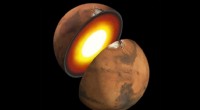
9. InSight (2018-2023)
- Stationary lander that studied the interior structure of Mars
- Deployed a seismometer and heat flow probe
10.Perseverance (2020-present)
- Landed in Jezero Crater
- Collected sample tubes that NASA aims to bring back to Earth
All these spacecrafts contributed with new data and helped scientists around the world understand Mars even better.