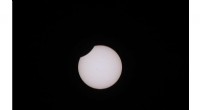
The Moon's Phases
The moon's phases are the different shapes that the moon appears to have as seen from Earth. The moon goes through a complete cycle of phases every 29.5 days.
* New Moon: The moon is between the Earth and the sun, so the side facing Earth is not illuminated. The moon is not visible from Earth during this phase.
* Waxing Crescent: The moon is moving away from the sun, and the illuminated side is gradually increasing. The moon appears as a thin crescent in the sky.
* First Quarter: The moon is at a right angle to the Earth and the sun, and half of the moon is illuminated. The moon appears as a half circle in the sky.
* Waxing Gibbous: The moon is continuing to move away from the sun, and the illuminated side is getting larger. The moon appears as a more than half circle in the sky.
* Full Moon: The moon is opposite the sun from Earth, so the entire side facing Earth is illuminated. The moon appears as a full circle in the sky.
* Waning Gibbous: The moon is moving closer to the sun, and the illuminated side is gradually decreasing. The moon appears as a more than half circle in the sky.
* Third Quarter: The moon is at a right angle to the Earth and the sun, and half of the moon is illuminated. The moon appears as a half circle in the sky.
* Waning Crescent: The moon is continuing to move closer to the sun, and the illuminated side is getting smaller. The moon appears as a thin crescent in the sky.
The moon's phases are caused by the relative positions of the Earth, the moon, and the sun. As the moon orbits the Earth, it moves between the Earth and the sun, and the sun illuminates different portions of the moon. From our perspective on Earth, we see these different illuminated portions as the moon's phases.