Space probes are uncrewed spacecraft that travel into space to collect scientific data. Equipped with advanced instruments like cameras, spectrometers, and sensors, they provide detailed observations of celestial objects up close.
2. Telescopes:
Modern telescopes, such as the Hubble Space Telescope and the James Webb Space Telescope, have significantly expanded our ability to observe the universe in various wavelengths. They enable us to study distant objects, detect fainter details, and unravel the mysteries of the cosmos.
3. Spectroscopy:
Spectroscopy involves analyzing the light emitted or absorbed by objects in space. By splitting light into its component wavelengths, scientists can determine the chemical composition, temperature, and motion of celestial bodies.
4. Radio Astronomy:
Radio telescopes detect and study radio waves emitted by cosmic objects. This allows astronomers to observe star formation, interstellar gas clouds, and other phenomena not visible in optical light.
5. X-ray and Gamma-ray Astronomy:
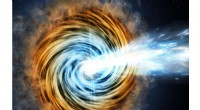
X-ray and gamma-ray telescopes help study high-energy phenomena in the universe, such as black holes, neutron stars, and supernova remnants. These telescopes detect and analyze X-rays and gamma rays emitted by these energetic sources.
6. Infrared Astronomy:
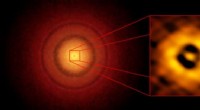
Infrared telescopes study objects that emit infrared radiation, which can penetrate dust and gas in space. This helps us understand star formation regions, protoplanetary disks, and the evolution of galaxies.
7. Adaptive Optics:
Adaptive optics systems correct for distortions caused by Earth's atmosphere, providing sharper images and enabling detailed observations of celestial objects.
8. Interferometry:
Interferometry combines light from multiple telescopes or observatories to achieve higher resolution and sensitivity, allowing scientists to probe deeper into space and study faint objects.
9. Gravitational Wave Observatories:
Gravitational wave observatories, like the Laser Interferometer Gravitational-Wave Observatory (LIGO), detect ripples in spacetime caused by events like black hole mergers or neutron star collisions, offering insights into the most extreme phenomena in the universe.
10. Computational Tools:
Advanced computational tools, data processing algorithms, and simulations enable scientists to analyze vast amounts of data collected from space missions and telescopes, helping us understand complex astronomical processes.