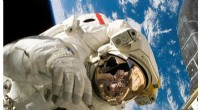
1. Low Earth Orbit: The spacecraft begins its journey in a low Earth orbit, typically about 200-400 kilometers above the Earth's surface.
2. Initial Boost: From the low Earth orbit, the spacecraft fires its engines to gain enough speed to escape Earth's gravity and enter a heliocentric orbit around the Sun.
3. Hohmann Transfer Orbit: The spacecraft then enters the Hohmann transfer orbit, which is an elliptical path that intersects the orbits of both Earth and Jupiter. The semi-major axis of this elliptical orbit is calculated based on the desired transfer time and the positions of Earth and Jupiter.
4. Earth Departure Burn: At the point where the spacecraft's orbit intersects Earth's orbit, it performs another engine burn to increase its speed and raise its perihelion (closest point to the Sun). This maneuver propels the spacecraft away from Earth and into the transfer orbit.
5. Coast Phase: During the majority of the transfer, the spacecraft coasts along its Hohmann transfer orbit, relying on the Sun's gravity to carry it towards Jupiter. This phase can last several months to years, depending on the specific launch date and the desired transfer time.
6. Jupiter Arrival Burn: As the spacecraft approaches Jupiter, it performs another engine burn to reduce its speed and lower its perihelion. This maneuver enables the spacecraft to enter an elliptical orbit around Jupiter.
7. Jupiter Orbit: Once captured by Jupiter's gravity, the spacecraft can adjust its orbit further using propulsive maneuvers to achieve its desired trajectory for scientific exploration.
It's worth noting that the specific details of the Hohmann transfer trajectory, such as the launch window, burn durations, and transfer time, would depend on the exact starting point, target orbit, and mission objectives. Precise calculations and trajectory optimization are necessary to achieve a successful Hohmann transfer to Jupiter.