Intrastellar space, which refers to the region between stars within the Milky Way, presents numerous challenges for human exploration. These challenges encompass various aspects, such as:
1. Vast Distances: Distances between stars are incomprehensibly vast. The closest star to our Sun, Proxima Centauri, is approximately 4.24 light-years away, which is equivalent to 25 trillion miles. Considering that our fastest spacecraft, New Horizons, travels at a speed of about 36,000 miles per hour, reaching nearby stars could take multiple generations or require revolutionary advances in propulsion technology.
2. Interstellar Medium: Intrastellar space is not empty. It contains interstellar gas and dust (known as the interstellar medium) that can be hazardous to spacecraft. Impacts with even small particles can cause significant damage over time. Additionally, radiation levels in some parts of the interstellar medium can be extremely high, posing a serious threat to human health.
3. Life Support Systems: Sustaining human life during interstellar voyages requires reliable, self-sufficient life support systems. This involves providing an atmosphere with appropriate pressure and composition, recycling air and water, handling waste, and maintaining a comfortable temperature and humidity. Challenges arise from the long durations of interstellar journeys and the need to minimize supplies carried onboard.
4. Psychological Challenges: Intrastellar missions would necessitate long periods of isolation, confined living quarters, and potential monotony. Dealing with psychological stressors, maintaining crew morale, and preventing mental health issues become significant concerns during such prolonged journeys.
5. Radiation Exposure: Intrastellar space is exposed to various sources of radiation, including cosmic rays, solar flares, and radiation belts around nearby stars. These radiations can pose significant health risks to astronauts and electronics, requiring adequate shielding and protective measures.
6. Communication: Due to the finite speed of light, communication delays between Earth and an interstellar spacecraft can be considerable. This poses challenges for real-time decision-making, coordination, and maintaining contact with crew members.
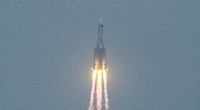
7. Energy Sources: Powering interstellar spacecraft over vast distances necessitates substantial energy sources. Traditional rocket propellants are inefficient for such journeys, and alternative propulsion methods, such as nuclear-powered or laser-driven systems, present their own challenges and risks.
8. Technology Readiness: Many technologies required for interstellar exploration, such as advanced propulsion systems, life support systems, and radiation shielding, are not yet fully developed or tested. Achieving the necessary level of technological maturity for interstellar travel is a significant challenge.
Despite the formidable challenges, intrastellar exploration offers compelling scientific, technological, and societal opportunities:
1. Exoplanet Exploration: The discovery of exoplanets (planets orbiting stars other than our Sun) has fueled our curiosity and raised questions about their habitability and potential for life. Interstellar exploration could enable direct observation, exploration, and even colonization of these distant worlds, providing insights into planetary formation, astrobiology, and the search for extraterrestrial life.
2. Resources and Energy: The vastness of space harbors untold resources, including minerals, rare elements, and potentially accessible sources of energy. Harvesting these resources could transform our economies, mitigate scarcity, and advance technological development.
3. Technological Advancements: Tackling the challenges of intrastellar travel would drive innovation and technological revolutions in various fields, including propulsion, life support systems, materials science, energy generation, and communication technologies.
4. Broadening Human Horizons: Pushing the boundaries of human exploration would expand our understanding of the cosmos, provide a new perspective on our place in the universe, and foster a sense of wonder and inspiration that enriches human culture and society.
5. Collaboration and Unity: Successful interstellar missions would necessitate unprecedented international cooperation and collaboration, fostering unity and inspiring future generations to tackle grand challenges.
6. Preservation of Human Civilization: In the long run, interstellar travel offers a potential safeguard for human civilization in case of catastrophic events or global crises on Earth, providing a backup or refuge for humanity.
While the challenges of intrastellar space exploration are immense, the potential rewards and opportunities they hold promise to revolutionize our knowledge, technology, and understanding of the universe.