The size of a supernova explosion can vary depending on the mass of the star that is exploding. However, even the smallest supernovae can be hundreds of times larger than our entire solar system. The largest supernovae can be so large that they can be seen from galaxies millions of light-years away.
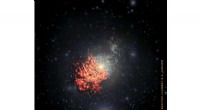
Supernovae are not only incredibly powerful, but they are also very beautiful. The ejecta from a supernova can create intricate and colorful patterns that can be seen from Earth with telescopes. Supernovae are also important because they play a crucial role in the evolution of galaxies and the formation of new stars.
Here is a table that shows the approximate sizes of different types of supernovae:
| Supernova Type | Size |
|---|---|
| Type Ia | 100,000-1,000,000 km |
| Type Ib/Ic | 1,000,000-10,000,000 km |
| Type II | 10,000,000-100,000,000 km |
As you can see, even the smallest supernovae are extremely large. The largest supernovae can be so large that they are difficult to comprehend. However, they are all fascinating and beautiful phenomena that play an important role in the universe.