1. Lunar Soil and Rocks: NASA collected samples of lunar soil and rocks during the Apollo missions. Analysis of these samples provided valuable information about the Moon's composition and structure. Lunar rocks included basalts and anorthosites, suggesting a volcanic origin.
2. Water Ice: NASA's Lunar Reconnaissance Orbiter (LRO) and Lunar Crater Observation and Sensing Satellite (LCROSS) missions provided strong evidence for the presence of water ice in permanently shadowed craters on the Moon. This finding has significant implications for future exploration and the potential for sustaining human presence on the Moon.
3. Moon's Surface Characteristics: NASA missions revealed the detailed topography and surface features of the Moon, such as maria (dark plains), highlands (bright areas), craters, rilles, and mountains. The high-resolution images and data collected helped create comprehensive maps and provided insights into the geological history of the Moon.
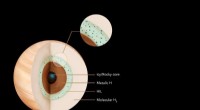
4. Moon's Thin Atmosphere: NASA found that the Moon has a tenuous atmosphere, known as the lunar exosphere. This atmosphere consists of small amounts of gases, including argon, neon, helium, and oxygen. However, the atmospheric pressure on the Moon is extremely thin compared to Earth.
5. Magnetic Fields: Lunar Prospector, a spacecraft launched in 1998, mapped the Moon's magnetic field and discovered magnetic anomalies in certain regions, suggesting the presence of ancient magnetic fields. These findings have implications for understanding the Moon's interior structure and its past magnetic activity.
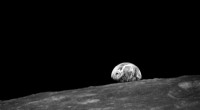
6. Lunar Farside: The Apollo missions orbited the Moon and captured images of its farside, a region that faces away from Earth. The farside has a different topography compared to the nearside and includes features like the South Pole-Aitken basin, which is one of the largest impact craters in the Solar System.
7. Lunar Volcanic Activity: Studies of lunar samples and observations from satellites provided evidence for past volcanic activity on the Moon, particularly during its early history. The presence of volcanic features and lava flows helped understand the thermal evolution of the Moon.
8. No Life Detected: Despite extensive searches and experiments during the Apollo missions, NASA did not find any evidence of life on the Moon. The Moon's surface conditions, including the lack of liquid water and a substantial atmosphere, make it challenging for life as we know it to exist there.
These findings from NASA's missions to the Moon have significantly expanded our understanding of the Moon's origin, composition, surface features, and geological processes. They continue to inform future lunar missions and contribute to the overall exploration and understanding of our solar system.