1. Nuclear Fusion: In the sun's core, hydrogen atoms undergo nuclear fusion, combining to form helium atoms. This process releases a tremendous amount of energy, sustaining the sun's luminosity and heat. However, fusion also results in a loss of mass. Each time four hydrogen atoms fuse to form a helium atom, a small amount of mass (about 0.7% of the original mass) is converted into pure energy according to Einstein's famous equation, E=mc². This lost mass escapes from the sun.
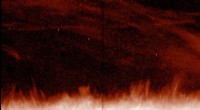
2. Solar Wind: The sun continuously emits charged particles, known as the solar wind, from its outermost layer, the corona. This stream of particles, consisting mainly of electrons and protons, carries away a significant amount of mass from the sun. Although the individual particles have a tiny mass, the constant and powerful flow of solar wind over billions of years adds up to substantial mass loss.
As a result of these two processes, the sun loses approximately 4 million tons of mass every second. While this seems like a large number, it represents only a minuscule fraction of the sun's total mass (~2 x 10^30 kilograms). Therefore, the sun's mass loss is gradual and has a negligible impact on its overall size and gravitational pull over human timescales. However, over billions of years, this mass loss contributes to the eventual fate of the sun and its evolution into a red giant and eventually a white dwarf.