In the context of cosmology and our understanding of the cosmos, photons play a significant role in several aspects:
1.Cosmic Microwave Background (CMB): Photons that originated from the Big Bang, the event that is believed to have given rise to our universe, form what we call the Cosmic Microwave Background. This radiation is the oldest light in the universe and provides crucial information about the early stages of its evolution. By studying the properties and distribution of CMB photons, cosmologists gain insights into the geometry, composition, and other fundamental parameters of the universe.
2.Redshift and Hubble's Law: Photons emitted by distant galaxies undergo a phenomenon called redshift, where their wavelength increases as they travel through space. This redshift is caused by the expansion of the universe, and the amount of redshift provides information about the distance and velocity of galaxies relative to us. Hubble's Law states that the farther an object is from us, the faster it is moving away. By measuring the redshift of photons from distant galaxies, astronomers can estimate the rate of expansion of the universe and infer its age.
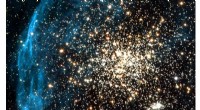
3.Observational Astronomy: Photons from celestial objects carry information about their composition, temperature, density, and other physical properties. By capturing and analyzing the photons through telescopes and other instruments, astronomers can study various cosmic objects such as stars, galaxies, nebulae, and quasars. This enables us to understand the nature of these objects, their life cycles, and the different phenomena occurring in the universe.
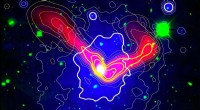
4.Gravitational Lensing: Photons can be affected by the gravitational fields of massive objects, such as galaxies or clusters of galaxies. When photons pass near these objects, their path can be bent or distorted, causing an optical effect called gravitational lensing. By observing the distortions in the shapes and positions of distant galaxies or quasars due to gravitational lensing, cosmologists can study the distribution of mass in the universe and gain insights into the nature of dark matter and the large-scale structure of the cosmos.
In summary, while photons do not orbit in the same way as celestial bodies, they contribute to our understanding of the cosmos by providing valuable information about the universe's origin, expansion rate, the properties of distant objects, and the effects of gravity on the trajectories of light. Photons serve as messengers that carry vital clues about the nature and evolution of the vast universe we inhabit.