Surface Features:
1. Valles Marineris: This is one of the most prominent surface features on Mars. It is a vast canyon system that stretches for over 4000 kilometers and is up to 7 kilometers deep. This colossal valley is comparable in size to the Grand Canyon in the United States.
2. Olympus Mons: This is the largest volcano in the Solar System, rising approximately 21 kilometers above the Martian surface. It has a diameter of about 600 kilometers and dwarfs Mount Everest on Earth.
3. Tharsis Montes: This region features several large volcanoes, including Ascraeus Mons, Pavonis Mons, and Arsia Mons. These massive volcanoes formed due to the movement of tectonic plates on ancient Mars.
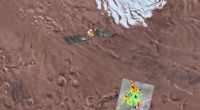
4. Polar Ice Caps: Mars has polar ice caps composed of frozen carbon dioxide (dry ice) and water ice. The ice caps expand and contract depending on the Martian seasons.
5. Craters: Like the Moon, Mars has numerous impact craters, some reaching diameters of hundreds of kilometers. These craters are remnants of ancient impacts by asteroids and comets.
Atmospheric Features:
1. Dust Storms: Martian dust storms can range in size from small to planet-wide events known as global dust storms. These powerful storms can alter the appearance of the Martian surface and affect its climate.
2. Atmosphere Composition: The Martian atmosphere is composed primarily of carbon dioxide (95.3%) with trace amounts of nitrogen (2.7%), argon (1.6%), and oxygen (0.13%).
3. Atmospheric Pressure: The atmospheric pressure on Mars is extremely thin compared to Earth. The average surface pressure is only about 6.3 millibars, less than 1% of Earth's atmospheric pressure at sea level.
4. Water Vapor: Although Mars has a very thin atmosphere, it does contain water vapor. However, the amount of water vapor is highly variable and influenced by seasonal changes.
5. Clouds: Clouds formed from water ice and/or carbon dioxide ice exist in the Martian atmosphere, particularly during certain seasons or near specific regions like Tharsis and Olympus Mons.
These features make Mars an incredibly interesting and geologically active celestial body, offering valuable insights into the history and evolution of the planet and providing clues about the potential for past or present life on Mars.