Optical telescopes: These telescopes collect and focus light from the stars, allowing astronomers to see them in greater detail. Optical telescopes come in a variety of sizes, from small refractors that can be used by amateur astronomers to large reflectors that are used by professional observatories.
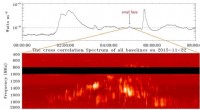
Radio telescopes: These telescopes collect and focus radio waves from the stars, allowing astronomers to study their physical properties, such as their temperature and density. Radio telescopes are often used to study stars that are too faint to be seen with optical telescopes.
Infrared telescopes: These telescopes collect and focus infrared radiation from the stars, allowing astronomers to study their temperature and composition. Infrared telescopes are often used to study stars that are hidden by dust or gas.
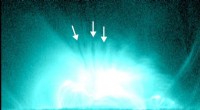
Ultraviolet telescopes: These telescopes collect and focus ultraviolet radiation from the stars, allowing astronomers to study their hot outer atmospheres. Ultraviolet telescopes are often used to study stars that are undergoing violent activity, such as flares or eruptions.
X-ray telescopes: These telescopes collect and focus X-rays from the stars, allowing astronomers to study their high-energy processes, such as nuclear fusion. X-ray telescopes are often used to study stars that are very hot or have strong magnetic fields.
Gamma-ray telescopes: These telescopes collect and focus gamma rays from the stars, allowing astronomers to study their most energetic processes, such as supernovae or black hole accretion disks. Gamma-ray telescopes are often used to study stars that are located in the most extreme environments in the universe.
In addition to these telescopes, astronomers also use a variety of other instruments to study the stars, such as spectrometers, photometers, and polarimeters. These instruments allow astronomers to measure the stars' light at different wavelengths, intensities, and polarizations, which provides information about their chemical composition, temperature, and magnetic fields.