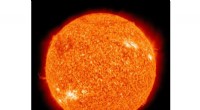
The sun is a star at the center of our solar system. Planets, on the other hand, are celestial bodies that orbit the sun.
2. Size and Mass
The sun is much bigger and more massive than any planet in our solar system. It contains more than 99.8% of the mass of our entire solar system.
3. Energy Source
The sun produces energy through nuclear fusion reactions. This is a process where two atoms are combined to form a single heavier atom, releasing a tremendous amount of energy in the process. In the sun's case, hydrogen atoms fuse to form helium. No other planet in our solar system has the ability to produce its energy.
4. Light and Heat
The sun emits vast amounts of light and heat due to its ongoing fusion reactions. This energy is what sustains life on Earth and helps regulate the temperature on our planet. Other planets either receive too much or too little of this energy to sustain life.
5. Atmosphere and Composition
The sun has a hot and ionized atmosphere, known as the solar corona, which extends millions of kilometers into space. Unlike planets with solid, liquid, or gaseous surfaces, the sun is mostly composed of hot plasma.
6. Gravity and Orbits
The sun's gravity exerts a strong gravitational pull on the planets in our solar system, causing them to orbit around it in elliptical paths. No planet has the same gravitational influence on other objects as the sun.
7. Solar Wind
The sun emits a constant outflow of charged particles known as the solar wind. This solar wind has an impact on the planets' magnetic fields and can cause phenomena such as auroras on Earth.
In summary, the sun is fundamentally different from planets due to its immense size, mass, energy production, and its role as the central source of light, heat, and gravity in our solar system.