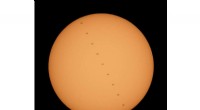
In our solar system, the Sun is the central object, and all the planets, including Earth, follow specific paths around it. These paths are called orbits. Each planet has its unique orbit, determined by its distance from the Sun and its orbital period – the time it takes to complete one full revolution around the Sun.
When we say an object is orbiting the Sun, we mean it is continuously moving along its orbital trajectory, bound to the Sun's gravitational influence. This motion is governed by the laws of planetary motion, as described by Johannes Kepler in the 17th century.
Here are some key points to understand about orbiting the Sun:
- Gravitational Force: The Sun's immense gravitational pull exerts a force on nearby celestial objects, causing them to move in elliptical or near-circular paths around it.
- Orbital Mechanics: The movement of objects in space, including their orbits, follows specific principles of orbital mechanics. These principles involve factors like velocity, momentum, and the balance between gravitational forces and inertia.
- Orbital Periods: Each planet's orbital period is unique. For example, Earth's orbital period is approximately 365.242 days (one year). This means it takes Earth this amount of time to complete one full orbit around the Sun.
- Elliptical Orbits: Most planets, including Earth, have elliptical orbits. This means that their paths around the Sun are slightly elongated rather than perfectly circular.
- Planetary Sequences: The planets in our solar system are arranged in a specific sequence based on their orbits. Mercury is the closest to the Sun, followed by Venus, Earth, Mars, Jupiter, Saturn, Uranus, and Neptune. This sequence is determined by their respective distances from the Sun.
Understanding how objects orbit the Sun is crucial for comprehending the dynamics of our solar system and the behavior of celestial bodies under the influence of gravitational forces.