* Inner planets: The inner planets—Mercury, Venus, Earth, and Mars—are all relatively dense, with densities ranging from 3.34 g/cm³ for Mercury to 5.51 g/cm³ for Earth. These planets are composed primarily of heavy elements, such as iron and nickel, which are more abundant closer to the Sun.
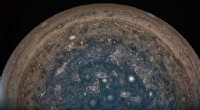
* Outer planets: The outer planets—Jupiter, Saturn, Uranus, and Neptune—are all significantly less dense than the inner planets, with densities ranging from 1.33 g/cm³ for Saturn to 1.64 g/cm³ for Neptune. These planets are composed primarily of lighter elements, such as hydrogen and helium, which are more abundant farther from the Sun.
This trend can be explained by the process of planetary accretion. As dust and gas congealed around the proto-Sun, the heavier elements were more strongly attracted to the Sun's gravity and became concentrated in the inner solar system. This left the lighter elements behind in the outer solar system to form the gas giants.
Another contributing factor to this trend is the heating effect of the Sun. The closer a planet is to the Sun, the more intense the solar radiation it receives. This radiation heats the planet's surface and causes the heavier elements, such as iron and nickel, to melt and sink to the core. This process leads to the formation of a denser core and a less dense mantle and crust.
However, it's important to note that there are some exceptions to this trend. For example, Pluto, which is considered a dwarf planet and is located beyond Neptune, has a density of 1.86 g/cm³. This suggests that other factors, such as the composition and formation history of a planet, can also influence its density.