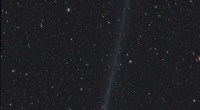
1. Jupiter's Rings: Voyager 1 discovered the presence of a faint ring system around Jupiter. This ring system is composed of small dust particles and is much less prominent compared to Saturn's rings.
2. Structure of Jupiter's Atmosphere: The mission observed that Jupiter's atmosphere is highly complex, with distinct bands of clouds visible in different latitudes. These cloud bands are created by atmospheric currents called jet streams, with alternating directions and speeds.
3. Jupiter's Great Red Spot: Voyager 1 captured detailed images of Jupiter's iconic Great Red Spot, revealing that it is a giant storm larger than Earth. The mission observed the spot's complex structure and rotation, providing valuable insights into its dynamics and longevity.
4. Volcanism on Jupiter's Moon Io: The mission discovered significant volcanic activity on Jupiter's moon Io. Voyager 1 observed active eruptions and volcanic plumes on the moon's surface, making Io the most volcanically active object in the Solar System.
5. Magnetic Field and Radiation Belts: Voyager 1 measured Jupiter's intense magnetic field and characterized the harsh radiation environment near the planet. It revealed the presence of Jupiter's huge magnetosphere, which is shaped by the rotation and interaction of the magnetic field with the solar wind.
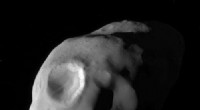
6. Moons and Other Discoveries: Voyager 1 also discovered new moons orbiting Jupiter, including small moons such as Thebe and Metis, as well as the moon Amalthea, which is irregularly shaped. The mission provided detailed images and data on the Galilean moons (Io, Europa, Ganymede, and Callisto), enhancing our understanding of their composition and geological features.
Overall, the Voyager missions made groundbreaking observations and discoveries about Jupiter and its complex system, greatly advancing our knowledge of the largest planet in our Solar System.