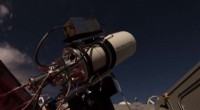
Telescopes: Scientists use large telescopes to capture and focus light from distant objects. These telescopes are equipped with mirrors or lenses to magnify the light, allowing astronomers to observe faint details and collect data from faraway sources.
Spectrographs: Spectrographs are instruments that analyze the wavelength and intensity of light. By splitting the light into its component colors, spectrographs provide crucial information about the composition, temperature, and motion of celestial objects.
Filters: Optical filters are used to isolate specific wavelengths or ranges of light. This helps in isolating light from particular sources or features of astronomical objects.
Imaging Techniques: Advanced imaging techniques such as adaptive optics and interferometry are employed to enhance the resolution of telescopic observations. These techniques compensate for distortions caused by the Earth's atmosphere, resulting in sharper images of cosmic objects.
Spectral Line Analysis: Scientists study specific features in the spectra of light from distant objects. These features, called spectral lines, correspond to the absorption or emission of light by specific elements or molecules. By analyzing the patterns of spectral lines, scientists can determine the chemical composition and physical conditions of the objects they are observing.
Time-Resolved Observations: Monitoring the light from distant sources over time provides valuable insights. Observations of varying brightness, color, or other properties can shed light on the dynamics, variability, and evolution of these distant celestial objects.
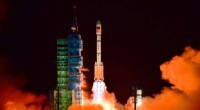
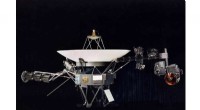
Spacecraft: Space missions play a vital role in studying light from distant objects by placing telescopes and instruments beyond the obscuring effects of the Earth's atmosphere. Space-based observations provide higher resolution, sensitivity, and access to different regions of the electromagnetic spectrum.
Data Analysis and Interpretation: The enormous amount of data collected from telescopes and instruments undergoes rigorous analysis and interpretation. Scientists employ statistical techniques, modeling, and theoretical knowledge to extract meaningful information from the observed light and draw conclusions about the nature of distant objects and phenomena.