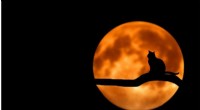
According to this theory, the Moon's appearance changes as it rotates on its axis and orbits around the Earth. As the Moon rotates, different portions of its surface are illuminated by the Sun, creating the different phases that we observe from Earth.
When the Moon is between the Earth and the Sun (during the New Moon phase), the side of the Moon facing Earth is not illuminated, and we see a dark circle. As the Moon orbits the Earth, it gradually moves away from the Sun, revealing more of its illuminated side to us. This results in the Waxing Crescent, First Quarter, Waxing Gibbous, and Full Moon phases.
As the Moon continues to orbit, it begins to move closer to the Sun again, causing the illuminated portion of the Moon to decrease. This leads to the Waning Gibbous, Third Quarter, Waning Crescent, and New Moon phases.
![Collimated Bipolar Jet Discovered Around Red Square Nebula s B[e]-type Star](https://www.scienceaq.com/article/uploadfiles/202110/2021102423305770_S.jpg)