1. Distance: The outer planets are located billions of kilometers away from Earth, making it challenging to send probes and conduct direct observations. The vast distances involved limit our ability to gather detailed information and necessitate complex and expensive space missions.
2. Inaccessibility: The outer planets are primarily composed of gas and lack solid surfaces like Earth. This makes it difficult to land on these planets and collect samples for analysis. Scientists rely on remote sensing techniques, such as telescopes and spectrometers, to study their atmospheres and compositions.
3. Harsh Environments: The outer planets have extreme and hostile environments. For example, Jupiter and Saturn are known for their powerful storms and intense radiation belts, which pose significant risks to spacecraft and limit our ability to explore these regions in detail.
4. Lack of Data: Despite several successful space missions, such as the Voyager 1 and 2 probes and the Cassini-Huygens mission to Saturn, our knowledge about the outer planets is still limited compared to the inner planets. The data gathered from these missions provide valuable insights, but they only offer glimpses into these distant worlds.
5. Limited Exploration: Exploring the outer planets is a complex and resource-intensive endeavor. Space missions require years of planning and involve sophisticated technologies to overcome the challenges of distance and harsh environments. Consequently, the number of successful missions to these planets has been limited.
6. Atmospheric Complexity: The atmospheres of the outer planets are highly dynamic and complex. They exhibit diverse weather patterns, including powerful winds, storms, and banded structures, which make it challenging to understand their behavior and evolution.
7. Time Scales: The outer planets have long orbital periods and rotate slowly compared to Earth. This means that changes and phenomena on these planets occur over timescales that are difficult to observe and study in real-time.
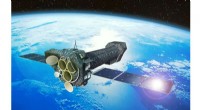
8. Technological Challenges: Sending spacecraft to the outer planets requires advanced propulsion systems and robust communication technologies to overcome the vast distances and maintain contact with Earth. These technological challenges contribute to the complexity and cost of exploring these distant worlds.
Despite the challenges, scientific exploration and research continue to expand our understanding of the outer planets. Ongoing missions, such as the Juno mission to Jupiter and the upcoming Europa Clipper mission to Jupiter's moon Europa, aim to provide new insights into these enigmatic celestial bodies.