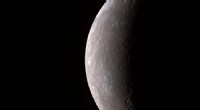
1. Mercury's proximity to the Sun: Mercury is the closest planet to the Sun, orbiting it at a distance of only about 57.9 million kilometers. This means that Mercury is often lost in the Sun's glare, making it challenging to spot with the naked eye.
2. Mercury's small size: Mercury is the smallest planet in our solar system, with a diameter of only about 4,879 kilometers. Its small size makes it harder to distinguish from the background sky.
3. Mercury's orbital characteristics: Mercury's orbit around the Sun is highly elliptical, which means its distance from the Sun varies significantly. When Mercury is at its closest point to the Sun (perihelion), it can be hard to see because it's so close to the Sun's bright disk. On the other hand, when Mercury is at its furthest point from the Sun (aphelion), it's higher in the sky but fainter because it's farther away from Earth.
4. Mercury's atmosphere: Mercury has an extremely thin atmosphere, which means it doesn't scatter sunlight very effectively. As a result, Mercury appears dim and featureless compared to other planets.
5. Timing and location: Mercury's visibility depends on the time of day and the observer's location. The best time to see Mercury is usually during the early morning or evening twilight, when it appears low in the eastern or western sky. However, the exact timing and sky conditions required for Mercury to be visible vary depending on the observer's location and the time of year.
Despite these challenges, Mercury can sometimes be seen with the naked eye under favorable conditions. It's often recommended to use binoculars or a small telescope to enhance the view and make Mercury more easily visible.