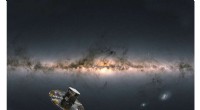
1. Astrometry: Astrometry involves precise measurements of the positions and movements of celestial objects over time. By comparing observations taken at different epochs, astronomers can determine the proper motion of stars, which is their angular displacement on the sky. Measuring the proper motion of a star can indicate whether it is moving in a straight line or along a curved path.
2. Parallax: Parallax is a geometric technique used to measure the distance to nearby stars. By observing a star from two different positions, such as Earth's orbit around the Sun, astronomers can calculate the star's distance and its motion relative to the observer. Parallax measurements can also provide information about the star's velocity and trajectory.
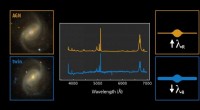
3. Spectroscopy: Spectroscopy is the study of the electromagnetic spectrum emitted or absorbed by celestial objects. By analyzing the spectral lines in a star's light, astronomers can determine its radial velocity, which is the component of its velocity along the line of sight from Earth. Radial velocity measurements can reveal whether a star is moving towards or away from us and can provide insights into its orbit.
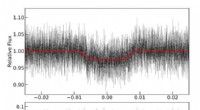
4. Photometry: Photometry involves measuring the brightness or flux of celestial objects. By monitoring changes in the brightness of stars over time, astronomers can detect variations that may indicate orbital motion or other forms of motion. Photometric observations can also help identify binary star systems or transiting exoplanets, which can affect the star's apparent motion.
5. Imaging Techniques: Modern telescopes equipped with high-resolution cameras allow astronomers to obtain detailed images of the sky. By combining images taken at different times, astronomers can create animations or time-lapse sequences that reveal the motion of stars. This method is particularly useful for studying the proper motion of stars in clusters or galaxies.
By combining these techniques and analyzing the data collected over time, astronomers can study the motion of stars and gain insights into their dynamics, trajectories, and interactions within stellar systems and galaxies.