1. Stars: Stars emit radiation across a wide range of frequencies, from visible light to ultraviolet, infrared, and X-rays. The Sun, for example, radiates energy in the form of sunlight.
2. Nebulae: Nebulae, vast interstellar clouds of gas and dust, emit radiation as they form stars and are influenced by the stellar radiation nearby.
3. Supernovae: Supernova explosions, the final stages in the lifecycle of massive stars, release an enormous amount of radiation, including gamma rays, X-rays, and visible light.
4. Black Holes: Accretion disks around black holes emit radiation as the matter falls into the black hole. This radiation can include X-rays and high-energy gamma rays.
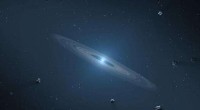
5. Active Galactic Nuclei (AGN): AGNs, which are powered by the supermassive black holes at the centers of galaxies, emit radiation across multiple wavelengths, including visible light, infrared, ultraviolet, and X-rays.
6. Pulsars: Pulsars, rapidly rotating neutron stars, emit beams of radiation including radio waves, X-rays, and gamma rays.
7. Cosmic Microwave Background (CMB): The CMB is the leftover radiation from the Big Bang, the event that created the universe. It is a faint, uniform radiation that fills the entire observable universe.
8. Gamma-Ray Bursts (GRBs): GRBs are extremely energetic explosions, believed to originate from the collapse of massive stars or the collision of neutron stars. They emit intense bursts of gamma rays and other types of radiation.
These are just some examples of objects that radiate energy in space. The universe is filled with various sources of radiation, and studying this radiation helps scientists understand the composition, dynamics, and history of the cosmos.