Mercury's surface temperature can reach up to 450 degrees Celsius (840 degrees Fahrenheit) during the day, but can drop to -180 degrees Celsius (-290 degrees Fahrenheit) at night. The planet's atmosphere is very thin, so there is no wind to redistribute the heat. As a result, the temperature variations between day and night are extreme.
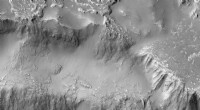
Mercury's surface is also heavily scarred by impacts. The planet is constantly being bombarded by meteoroids and asteroids, and these impacts have left their mark on the surface. Some of the most notable impact craters on Mercury include the Caloris Basin, which is about 1,550 kilometers (960 miles) in diameter, and the Rachmaninoff Crater, which is about 306 kilometers (190 miles) in diameter.
Mercury's surface is also home to a number of volcanoes. These volcanoes are thought to be the result of the movement of tectonic plates. Some of the most notable volcanoes on Mercury include the Mariner 10 Volcano, which is about 1,200 kilometers (750 miles) in diameter, and the Prokofiev Volcano, which is about 650 kilometers (400 miles) in diameter.
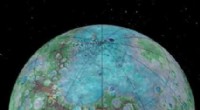
Mercury's surface is a unique and fascinating place. It is a world of extremes, with temperatures that can reach both very high and very low levels. The surface is also heavily scarred by impacts, and is home to a number of volcanoes. Mercury's surface is a testament to the violent and dynamic history of the planet.