1. Stellar Evolution: The mass-luminosity relationship plays a vital role in determining the evolutionary path of stars. Massive stars have higher luminosities and shorter lifespans compared to low-mass stars. This is because massive stars burn their nuclear fuel more rapidly, leading to their rapid evolution and eventual collapse.
2. Stellar Classification: The mass-luminosity relationship is used to classify stars based on their luminosity and surface temperature. The Hertzsprung-Russell (H-R) diagram, which plots the luminosity of stars against their surface temperature, is a graphical representation of the mass-luminosity relationship. Different regions of the H-R diagram correspond to stars of different masses and evolutionary stages.
3. Stellar Interiors: The mass-luminosity relationship provides information about the internal structure of stars. The luminosity of a star is directly proportional to the rate of energy production in its core. By knowing the luminosity, astronomers can infer the temperature and pressure conditions in the star's core, which are crucial for understanding the star's internal processes.
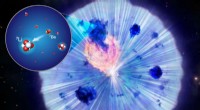
4. Stellar Nucleosynthesis: The mass-luminosity relationship also influences the nucleosynthesis processes that occur within stars. Massive stars produce heavier elements through nuclear fusion reactions in their cores. These elements are later ejected into the interstellar medium through stellar winds and supernova explosions, enriching the galaxy with heavier elements.
5. Star Formation and Galaxies: The mass-luminosity relationship is essential in understanding star formation and the properties of galaxies. The luminosity of a galaxy is closely related to the total mass of its stars. By studying the luminosity distribution of galaxies, astronomers can infer the star formation history and stellar populations within those galaxies.
Overall, the mass-luminosity relationship is a key concept in astrophysics that helps astronomers understand the behavior, evolution, and properties of stars, as well as the broader context of star formation and galactic evolution.