1. Understanding Lunar Orbits:
From a top view, it is easier to visualize and comprehend the moon's orbit around the Earth. The observer can see the elliptical path of the moon and how it changes throughout the lunar cycle. This perspective allows for a better understanding of the moon's motion, including its synodic period, which refers to the time it takes for the moon to complete one full cycle of phases as seen from Earth.
2. Phases Alignment:
A top view perspective provides a clear alignment of the Earth, moon, and sun, helping observers understand how their relative positions affect the visibility of moon phases. By looking down on the celestial bodies, it becomes evident how the sunlight hits the moon from different angles, resulting in different illuminated portions as observed from Earth. This perspective also makes it easier to grasp why certain phases, like full moons, occur when the Earth is positioned between the moon and the sun.
3. Eclipse Predictions:
Observing moon phases from above allows astronomers to predict lunar and solar eclipses. By carefully tracking the moon's orbit and aligning it with the positions of the sun and Earth, it becomes possible to identify when these celestial events may occur. This knowledge has been crucial in studying and predicting eclipses for centuries, enabling scientists to plan observations and research accordingly.
4. Comparative Analysis:
A top view of the moon's phases allows for comparisons with other planetary systems or even hypothetical scenarios. By observing how the angles of sunlight, the positioning of the moon and other bodies, and the resulting illumination patterns vary, astronomers can gain insights into the potential existence and characteristics of moon phases in other parts of the universe.
5. Visualization and Teaching:
The top view perspective provides an effective visual representation of moon phases, making it an excellent tool for teaching and educational purposes. It allows students and educators to grasp complex concepts related to lunar motion, phases, and their relationship to the Earth-sun system in a more intuitive and visual manner.
6. Exploration of Space Missions:
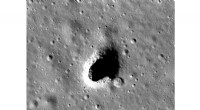
In planning space missions involving lunar exploration, such as landing on the moon or sending probes, a top view perspective is crucial. It helps mission planners visualize the moon's terrain and topography, identify potential landing sites, and anticipate the lighting conditions at various locations during different lunar phases.
7. Understanding Tides:
The moon's gravitational pull, along with the gravitational influence of the sun, causes tides on Earth. Observing moon phases from above aids in visualizing how the changing positions of the moon and Earth affect the tides. This perspective deepens the understanding of tidal patterns and their connection to the moon's orbit.
In conclusion, observing moon phases from a top view perspective provides a comprehensive understanding of the moon's motion, lunar phases, eclipse predictions, and the broader dynamics of the Earth-moon-sun system. It serves as a valuable tool for astronomers, educators, and space explorers, enhancing our knowledge and appreciation of the intricacies of our celestial neighborhood.