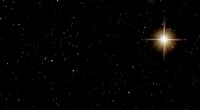
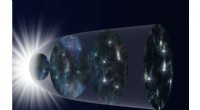
As starlight travels through the Earth's atmosphere, it encounters pockets of air with varying densities (temperature differences) and turbulent air currents. These variations in density act as tiny lenses, causing the starlight to bend and change direction slightly as it passes through them.
This bending of light results in the apparent shift in the star's position, making it appear to move or flicker back and forth rapidly. Additionally, changes in the air's temperature and pressure near the Earth's surface create further distortions in the starlight, enhancing the twinkling effect.
Atmospheric scintillation is most noticeable for stars located near the horizon. This is because the starlight from these stars travels through more of the Earth's atmosphere compared to stars at higher altitudes. The greater distance the light has to travel through the turbulent atmosphere, the more pronounced the scintillation effect becomes.
In contrast, stars that are directly overhead (at the zenith) experience less scintillation because their light travels through a shorter path of atmosphere. As a result, they appear to twinkle less or not at all.
The level of scintillation can vary depending on weather conditions, temperature variations, and the altitude at which the stars are observed. It is more pronounced on nights with strong atmospheric activity, such as during hot summer evenings or when there is significant wind or turbulence in the atmosphere.
While scintillation is often associated with the shimmering of stars, it can also affect the appearance of planets and other celestial objects in the night sky. However, due to their larger apparent sizes compared to stars, the twinkling effect is generally less noticeable for planets.