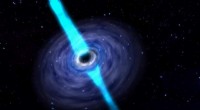
X-rays: Neutron stars are known to be powerful sources of X-rays. The high-energy X-ray emission from neutron stars is attributed to several processes:
1. Thermal Radiation: The surface of a neutron star, although incredibly hot (temperatures in the millions of degrees), emits thermal X-rays.
2. Magnetospheric Emission: The strong magnetic fields of neutron stars can create an environment where charged particles are accelerated and emit X-rays. This emission is often associated with the neutron star's polar cap regions.
3. Accretion: In binary systems where a neutron star accretes matter from a companion star, the interaction between the accreting material and the neutron star's magnetic field can generate X-rays.
Gamma Rays: Neutron stars can emit gamma rays through various mechanisms:
1. Starquakes: Sudden adjustments in the neutron star's crust can trigger seismic events known as "starquakes." These events can release bursts of gamma rays.
2. Magnetar Activity: Magnetars, which are neutron stars with exceptionally strong magnetic fields, are capable of emitting short and intense bursts of gamma rays known as "magnetar flares."
3. Accretion-Powered Gamma Rays: In certain binary systems, the interaction between the neutron star and the accreting matter can produce high-energy gamma rays.
Radio Waves: Neutron stars can also emit radio waves, although they are typically much fainter compared to their X-ray and gamma-ray counterparts. The emission of radio waves is often associated with the magnetosphere of the neutron star and the interaction with its surroundings.
It's worth noting that the exact nature of light emitted by neutron stars can vary depending on the specific characteristics of the neutron star, such as its rotation rate, magnetic field strength, and binary companion. Furthermore, different transient events or phenomena associated with neutron stars, like pulsar glitches, outbursts, or supernova remnants, can also produce unique emission signatures.