The lunar atmosphere is extremely thin compared to Earth's, with a total mass estimated to be less than 100 tons. The atmospheric pressure on the moon is about one trillionth (10^-12) of the Earth's atmospheric pressure at sea level.
The composition of the lunar atmosphere is also different from Earth's. It consists mainly of helium, argon, and neon, with trace amounts of other gases. The majority of these gases are thought to have been implanted by solar wind, which is a stream of charged particles emitted from the Sun.
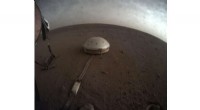
Because of its thin atmosphere, the moon does not have weather patterns or liquid water on its surface. The moon's surface is exposed directly to the harsh radiation from the Sun and cosmic rays, resulting in a barren and desolate landscape.