The Moon's surface is primarily composed of oxygen, silicon, magnesium, iron, calcium, and aluminum. These elements form various minerals and rocks, including:
* Basalt: A dark, volcanic rock that covers much of the Moon's surface.
* Anorthosite: A light-colored rock that is rich in plagioclase feldspar. Anorthosite is found in the highlands of the Moon.
* Olivine: A green mineral that is found in some of the Moon's volcanic rocks.
* Pyroxene: A dark mineral that is found in some of the Moon's volcanic rocks.
* Ilmenite: A black mineral that is rich in iron and titanium. Ilmenite is found in some of the Moon's mare basalts.
Physical Characteristics
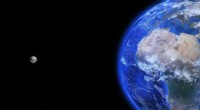
The Moon is a spherical body with a diameter of 3,474 kilometers (2,159 miles). It is the fifth largest moon in the Solar System and the largest moon in our own Solar System. The Moon has a mass of 7.3477 × 10^22 kilograms (1.62 × 10^23 pounds), which is about 1/81st that of Earth.
The Moon's surface is covered in craters, which are caused by impacts from asteroids and comets. Some of the craters are very large, such as the Orientale Basin, which is 930 kilometers (580 miles) in diameter. The Moon also has several large mountain ranges, such as the Lunar Apennines, which are over 6,000 meters (20,000 feet) high.
The Moon does not have an atmosphere, so the surface is exposed to the full force of the Sun's radiation. This causes the surface temperature to vary from -173 degrees Celsius (-280 degrees Fahrenheit) at night to 127 degrees Celsius (260 degrees Fahrenheit) during the day.
The Moon is tidally locked to Earth, which means that the same side of the Moon always faces Earth. This side of the Moon is called the near side, while the side that faces away from Earth is called the far side.