Hypernovae are the primary sources of heavy elements in the universe. They are also believed to be associated with the formation of gamma-ray bursts (GRBs), powerful flashes of high-energy radiation that are among the most energetic phenomena in the known universe.
The exact mechanisms that trigger hypernovae are still not fully understood, but it is believed that they involve a combination of factors such as the rapid rotation of the massive star, the presence of a strong magnetic field, and the interaction with a binary companion star.
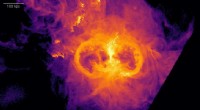
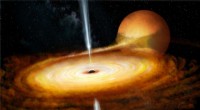
The aftermath of a hypernova can produce a variety of celestial objects, including black holes, neutron stars, and supernova remnants, which are expanding shells of gas and debris ejected by the explosion.
Hypernovae are relatively rare events in the universe, with only a handful of confirmed cases observed so far. One notable example is SN 1987A, a hypernova that occurred in the Large Magellanic Cloud, a satellite galaxy of our Milky Way.