1. Optical Telescopes:
- Optical telescopes collect and focus visible light from celestial objects. This is the most traditional method of observing the universe. Telescopes are equipped with mirrors, lenses, and detectors to capture images and spectra of stars, planets, galaxies, and other objects. By analyzing the brightness, color, and spectral features of the collected light, astronomers can infer important properties of these objects.
2. Radio Telescopes:
- Radio telescopes detect radio waves emitted by cosmic sources. Since many astronomical objects emit radio waves, such as pulsars, quasars, and some galaxies, radio telescopes are crucial for studying their behavior and the evolution of the universe. Radio telescopes consist of large dish-shaped antennas or arrays of smaller antennas that collect and focus radio waves, enabling astronomers to create radio images and spectra of the sky.
3. Infrared Telescopes:
- Infrared telescopes are designed to detect infrared radiation, which is invisible to the human eye. Many cosmic objects emit significant amounts of infrared radiation, including cool stars, dusty regions around young stars, and distant galaxies. Infrared telescopes equipped with specialized detectors and sensitive cameras allow astronomers to study these objects and phenomena that are obscured by dust or are too faint to be seen in visible light.
4. Ultraviolet Telescopes:
- Ultraviolet telescopes capture ultraviolet radiation from celestial sources. Some hot stars, active galaxies, and supernova remnants emit substantial ultraviolet light. Ultraviolet observations provide unique insights into stellar processes, star formation regions, and the properties of high-energy astronomical phenomena.
5. X-ray Telescopes:
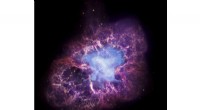
- X-ray telescopes detect X-rays emitted by extremely hot or energetic objects in the universe. Phenomena such as black holes, neutron stars, supernova remnants, and galaxy clusters emit X-rays. X-ray telescopes consist of specialized optics and detectors to capture and focus X-ray radiation, allowing astronomers to study high-energy processes and extreme environments in the cosmos.
6. Gamma-ray Telescopes:
- Gamma-ray telescopes are used to observe gamma rays, the most energetic form of electromagnetic radiation. Gamma rays are emitted by highly energetic events like gamma-ray bursts, pulsars, and active galactic nuclei. Detecting gamma rays requires specialized instruments and techniques due to their high energy and low flux.
In addition to these methods, astronomers also use other techniques such as gravitational wave detectors (for detecting gravitational waves from cosmic events), neutrino detectors (for studying neutrino emissions), and space probes (for direct exploration of planets and celestial bodies). By combining data from multiple wavelengths and instruments, astronomers gain a comprehensive understanding of the universe and the diverse phenomena that occur within it.