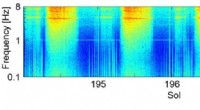
Helioseismology: This technique involves studying the Sun's oscillations and vibrations, known as solar oscillations. By analyzing these oscillations, astronomers can infer information about the Sun's internal structure and dynamics, including the layers below the photosphere. Helioseismology provides insights into the physical processes occurring within different regions of the Sun.
Spectroscopy: Spectroscopic observations allow astronomers to analyze the light emitted by the Sun at different wavelengths. By studying the absorption or emission lines in the Sun's spectrum, they can determine the chemical composition, temperature, and other physical properties of the different layers, including those below the photosphere.
Asteroseismology: Similar to helioseismology, asteroseismology involves the study of oscillations but specifically focuses on oscillations in stars, including the Sun. Asteroseismic techniques enable astronomers to probe the interior of the Sun, including the layers beneath the photosphere, by analyzing the frequencies and patterns of stellar oscillations.
Radio Observations: Radio telescopes can detect and analyze radio waves emitted by the Sun. Different layers of the Sun, including those below the photosphere, emit radio waves at specific frequencies. By studying these radio emissions, astronomers can gain insights into the physical conditions, magnetic activity, and dynamic processes occurring in the deeper layers of the Sun.
Neutrino Observations: Neutrinos are subatomic particles emitted in nuclear reactions, including those that occur within the Sun. Neutrino observatories can detect these neutrinos and study their properties, such as their energy and flux. By analyzing solar neutrinos, astronomers can infer information about the nuclear reactions taking place in the Sun's core and gain insights into the deep interior of the Sun.
These methods, combined with advancements in observational techniques, computational modeling, and theoretical understanding, allow astronomers to explore and study the layers of the Sun below the photosphere, providing valuable insights into its structure, dynamics, and behavior.