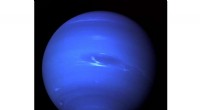
Moons: The outer planets also have more moons than the inner planets. Jupiter has 79 known moons, Saturn has 62 known moons, Uranus has 27 known moons, and Neptune has 14 known moons. In contrast, Mercury has no known moons, Venus has no known moons, Earth has 1 known moon, and Mars has 2 known moons.
Atmosphere: The outer planets have much thicker atmospheres than the inner planets. Jupiter, Saturn, Uranus, and Neptune all have atmospheres that are composed mostly of hydrogen and helium, with traces of other gases such as methane, ammonia, and water vapor. In contrast, the atmospheres of Mercury, Venus, Earth, and Mars are much thinner and are composed mostly of carbon dioxide, nitrogen, and oxygen.
Magnetic Fields: The outer planets all have strong magnetic fields, while the inner planets do not. Jupiter's magnetic field is the strongest of all the planets in the Solar System, and it is responsible for the formation of the planet's auroras. Saturn, Uranus, and Neptune also have strong magnetic fields, but they are not as strong as Jupiter's magnetic field.