- Gravitational Force: Every particle of mass in a planet experiences gravitational force from every other particle. This gravitational force acts towards the center of the planet, pulling the particles closer together and compressing the planet's mass.
- Hydrostatic Equilibrium: Planets are composed of various materials with different densities. Under the influence of gravity, these materials tend to distribute themselves in a way that balances the gravitational forces with the internal pressure exerted by the material itself. This state is known as hydrostatic equilibrium.
- Spherical Shape: In hydrostatic equilibrium, the pressure at any point within the planet is determined by the weight of the material above it. The pressure increases towards the center of the planet. As a result, the material inside the planet is compressed more towards the center, creating a spherical shape.
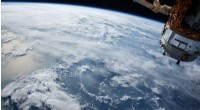
Imagine the Earth as a giant sphere of fluid. The particles within the Earth experience gravitational forces from all directions, pulling them towards the center. This compression causes the Earth to take a spherical form. The same principle applies to other planets, regardless of their size, composition, or distance from the Sun.