1. Cepheid Variable Stars: Hubble focused his studies on Cepheid variable stars, which are pulsating stars that change in brightness over a regular cycle. The period of this pulsation is directly related to the star's intrinsic brightness or luminosity.
2. Measuring Distances: Hubble observed Cepheid variables in nearby galaxies and measured their apparent brightness. By comparing the apparent brightness to the known intrinsic luminosity of Cepheids, he could calculate the distances to these galaxies.
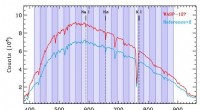
3. Redshift: Hubble also observed that the light coming from distant galaxies was shifted toward the red end of the spectrum. This phenomenon is known as redshift. The greater the redshift, the farther away the galaxy is from us.
4. Hubble's Law: By combining the distance measurements from Cepheid variables and the redshift observations, Hubble discovered a relationship between the distance to a galaxy and its redshift. This relationship is known as Hubble's Law.
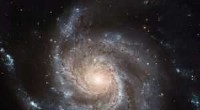
5. Expanding Universe: Hubble's Law showed that the farther away a galaxy is, the faster it is moving away from us. This led to the conclusion that the universe is expanding. Galaxies are not only moving apart from each other, but the expansion is also accelerating.
Edwin Hubble's work revolutionized our understanding of the universe. It shifted the perspective from a static and unchanging cosmos to one that is dynamic and constantly expanding. Hubble's observations provided the observational evidence for the Big Bang theory, which is the prevailing cosmological model that describes the evolution of the universe.