* Mass: 1.8986 x 10^27 kg (317.8 Earth masses)
* Volume: 1.4313 x 10^15 km³ (1,321 Earth volumes)
* Density: 1.326 g/cm³
* Surface gravity: 24.79 m/s² (2.54 g)
* Temperature: -110 °C at the cloud tops
* Composition: Mostly hydrogen and helium, with trace amounts of other elements
* Magnetic field: Strongest in the Solar System, with a dipole moment of 1.8 x 10^20 T m³
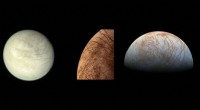
* Moons: 79 known moons, with the four largest being Io, Europa, Ganymede, and Callisto
51 Pegasi b
* Mass: 0.47 ± 0.07 Jupiter masses
* Volume: Unknown
* Density: Unknown
* Surface gravity: Unknown
* Temperature: 1,254 ± 46 K (981 ± 46 °C)
* Composition: Unknown, but likely mostly rock and gas
* Magnetic field: Unknown
* Moons: None known
As you can see, 51 Pegasi b is much smaller and hotter than Jupiter. It also has a much lower density, suggesting that it is composed of different materials. Additionally, 51 Pegasi b is not a gas giant like Jupiter, but rather a "hot Jupiter" that orbits very close to its star.