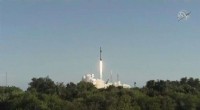
- It was launched into space in 1990, revolutionizing our understanding of the universe.
- It is a joint project of NASA and the European Space Agency (ESA).
- It is named after the astronomer Edwin Hubble, who made significant contributions to cosmology and observational astronomy.
- The telescope orbits Earth at an altitude of approximately 547 km (340 miles).
- Hubble's primary mirror has a diameter of 2.4 meters (7.9 feet), making it the largest optical telescope in space until the launch of the James Webb Space Telescope.
- It carries a variety of instruments, including cameras and spectrographs, which enable astronomers to observe objects across a broad range of wavelengths, from ultraviolet to near-infrared light.
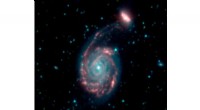
- Hubble has captured stunning images of distant galaxies, nebulae, supernova remnants, and other celestial phenomena, providing invaluable insights into the formation and evolution of the universe.
- The telescope has allowed scientists to measure the expansion rate of the universe more precisely, discover new types of galaxies, and track the movements of planets within our own solar system.
- Hubble has revolutionized the field of extragalactic astronomy, enabling scientists to study distant objects that were previously beyond the reach of ground-based telescopes.
- Despite being over three decades old, the Hubble Telescope continues to make groundbreaking observations and remains a critical tool for advancing our understanding of the universe.