Home
Chemistry
Astronomy
Energy
Nature
Biology
Physics
Electronics
Science
>>
Science Discoveries
> >>
Astronomy
Jupiter: The Solar System's Largest Planet - Facts & Details
The biggest planet in the Solar System is Jupiter, which has a diameter of approximately 142,984 km (88,846 miles) and a mass of approximately 318 times that of the Earth.
Jupiter vs. Mercury: The Solar System's Largest and Smallest Planets
Understanding Stellar Measurements: How Scientists Measure Stars
Astronomy
NASA’s Lunar Reconnaissance Orbiter Captures Stunning Image of Jupiter From the Moon
Scientists Confirm Carbon‑Rich Surface on Ceres Using Dawn Data
Solar Orbiter Poised for Scientific Missions After Overcoming COVID-19 Challenges
Science Discoveries
Aluminum Surpasses Gold: New Study Reveals Superior Plasmonic Properties
Jordan Sets Ambitious 10‑Million Tree Reforestation Goal to Foster Green Growth
Indian Institute of Science Breakthrough: Nanomaterials as First Broad‑Spectrum Antimicrobial Agents
Science Discoveries
Chemistry
Astronomy
Energy
Nature
Biology
Physics
Electronics
Geology
Solar Eclipse
Math
other
Nanotechnology
Astronomy
A Young, Fully Evolved Self‑Made Galaxy at Redshift z=3.35
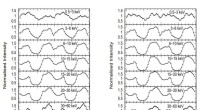
AstroSat Uncovers Detailed Pulse Profile of Cepheus X-4 Outburst
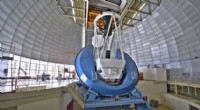
Solving Dark Energy: Upgrading a 45-Year-Old Telescope with DESI
Hubble Captures Neptune’s Shrinking Storm: A Diminishing Vortex Revealed
Witness Comet 46P/Wirtanen’s Close Approach on Sunday
Spot the Stunning Strawberry Moon Tonight: Full and Bright
|
Geology
|
Math
|
Solar Eclipse
Science Discoveries © www.scienceaq.com