Human Eye:
- Complexity: The human eye is an astonishing feat of biological engineering, containing millions of specialized cells and intricate structures that work together seamlessly. The retina alone, a thin layer at the back of the eye, houses millions of photoreceptor cells (cones and rods) responsible for capturing light and converting it into electrical signals. The lens fine-tunes the incoming light, enabling sharp focusing on objects at varying distances. The iris regulates the amount of light entering the eye, and the cornea provides a protective covering.
- Size: The human eye is relatively small, measuring about 2.5 centimeters (1 inch) in diameter. Despite its compact size, it packs an incredible amount of complexity and functionality.
Galaxy:
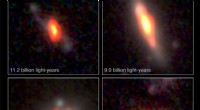
- Vastness: Galaxies are gargantuan cosmic structures composed of billions or trillions of stars, along with vast amounts of gas, dust, and dark matter. The Milky Way, our home galaxy, is estimated to contain around 200-400 billion stars. Galaxies can stretch across millions or hundreds of millions of lightyears, with each lightyear representing approximately 9.46 trillion kilometers (5.9 trillion miles).
- Complexity: Galaxies are not simply collections of stars; they exhibit complex structures, including spiral arms, elliptical shapes, and irregular forms. Within galaxies, there are clusters, superclusters, nebulae, black holes, and various astronomical phenomena that operate on incomprehensibly large scales.
The complexity of the human eye is truly remarkable, allowing us to perceive the world around us with stunning detail and clarity. However, when it comes to sheer scale and grandeur, the vastness of a galaxy dwarfs the size and complexity of the human eye by many orders of magnitude.