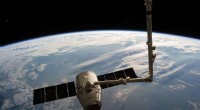
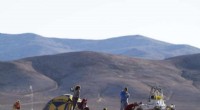
Atmospheric color or aerial perspective refers to the effect that the Earth's atmosphere has on the appearance of distant objects. As light travels through the atmosphere, it is scattered and absorbed by particles in the air, such as dust, water droplets, and molecules. This scattering and absorption of light causes the colors of distant objects to appear less saturated and more bluish or hazy. The amount of scattering depends on the wavelength of light, with shorter wavelengths (blue light) being scattered more than longer wavelengths (red light). This is why the sky appears blue during the day, and why distant objects appear bluish or hazy.
The effect of atmospheric scattering is particularly noticeable in mountainous regions or when viewing distant objects across bodies of water. For example, mountains in the distance may appear blue or purple, and the water in a lake or ocean may appear blue-green. The amount of atmospheric scattering also depends on the time of day, with the effect being more pronounced during sunrise and sunset when the sun's rays have to travel through more of the atmosphere to reach the observer.
Atmospheric scattering is an important factor in many fields, including photography, painting, and atmospheric science. In photography, atmospheric scattering can be used to create a sense of depth and distance in images. In painting, atmospheric scattering can be used to create realistic landscapes and to emphasize the effects of light and atmosphere. In atmospheric science, atmospheric scattering is studied to understand the composition and properties of the atmosphere, and to predict the weather.